
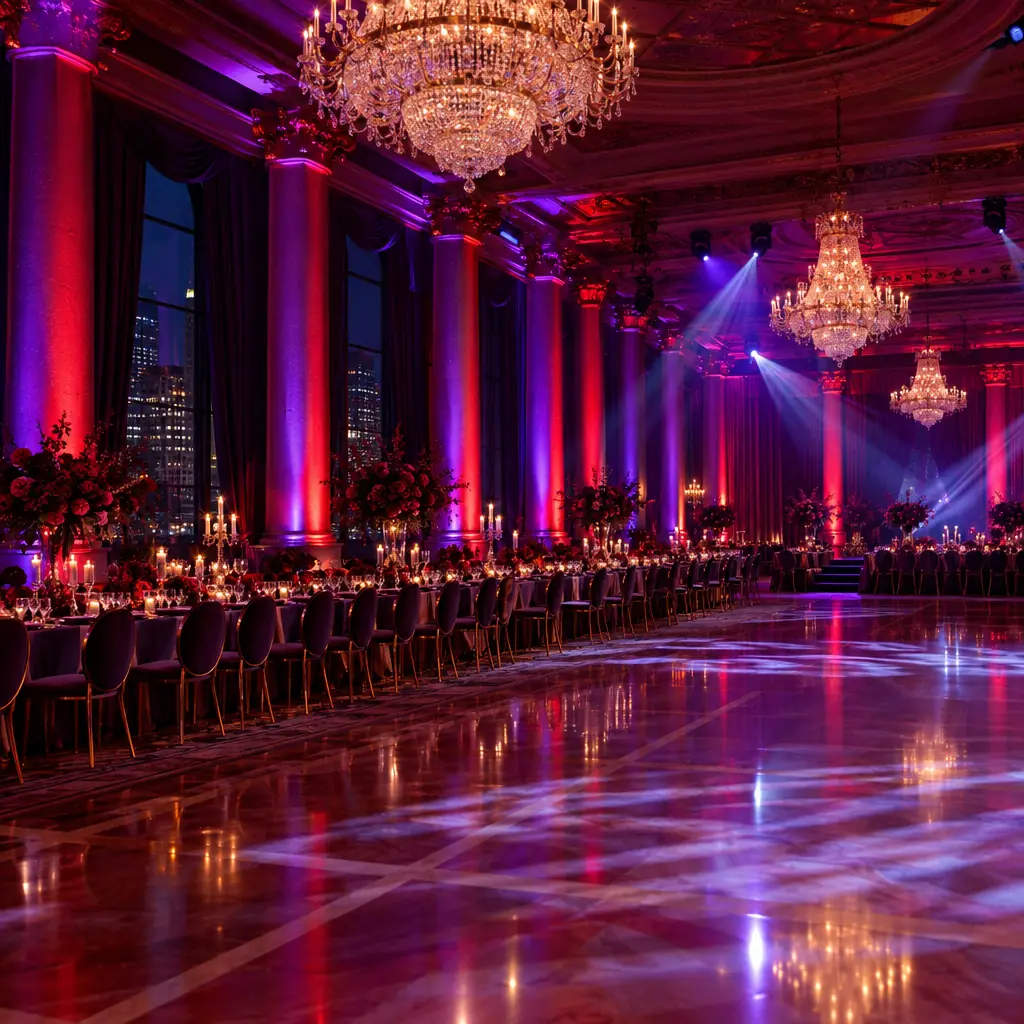
Lighting is the most misunderstood line item in a wedding budget, because it is usually sold as a package instead of a solution. Two questions decide everything: what does the room already look like, and what do you want the photos to feel like?
What uplighting actually does
Uplighting washes walls in color from the floor up. It changes the architecture of a room without adding anything visible. Beige walls, tent panels and plain ballrooms benefit most.
It also does the heaviest lifting in photographs, because it separates your guests from the background. If your venue has tall walls or a large room, uplighting is usually the highest-impact purchase after the DJ itself.
What dance floor lighting does
Dance floor lighting is about energy in motion: color changes, beams, and movement that follows the music. It is what makes the floor look alive in video and what pulls guests toward it.
Dance-floor lighting is available when listed in your written quote and signed agreement. Moving heads may be an option depending on the room and venue rules.
When you need both
Large ballrooms and tents usually need both: uplighting for the room and dance floor lighting for the party. Smaller restaurants and galleries often only need the floor lighting, because the space already has character.
The wrong move is over-lighting a small room. Too much color makes a cozy space look busy and flattens faces in photos.
Questions to ask before you buy
Ask what the venue allows: haze restrictions, rigging rules, power capacity and load-in times all change the design. Ask your photographer what they prefer. Ask how closely the fixtures can match your palette and whether you can review a sample in the venue.
Then ask what happens if a fixture fails. Redundancy is not glamorous, but it is the difference between a design and a dark wall.
- Does the venue allow haze and rigging?
- How much power is available at the DJ position?
- How closely can the lights match our colors?
- What is the backup plan for a failed fixture?
Key takeaways
- Uplighting changes the room; dance floor lighting changes the energy.
- Large ballrooms and tents usually need both.
- Confirm haze, rigging and power rules with the venue first.
- Review lighting colors against your venue finishes and event palette.