
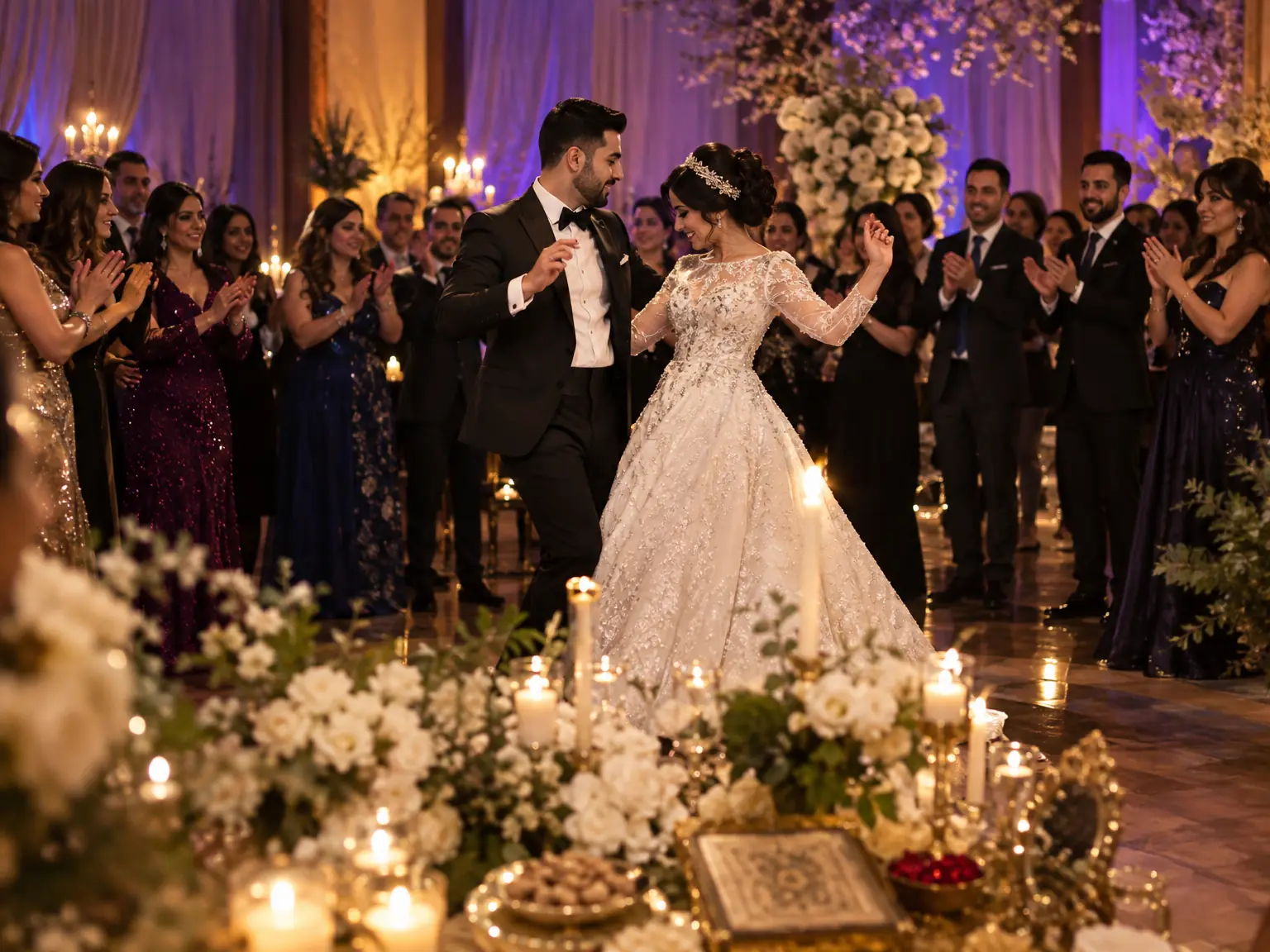
Persian ceremonies are built on cue points, and each one has a musical expectation attached. When they land, the room feels effortless. When they do not, everyone notices, even guests who cannot explain why.
The Sofreh Aghd sequence
The ceremony has a clear order: the sofreh, the couple’s entrance, the officiant’s welcome, the vows, the symbolic rituals and the celebration. Each needs a different energy. Soft instrumental music through the vows, then a lift at the moment the ceremony concludes.
I ask for the officiant’s cue words in advance so the music follows the ceremony rather than interrupting it. That single detail is what makes a Persian ceremony feel professional.
The knife dance is choreography
The knife dance is a build with a drop. The dancers need a track that rises, a clear moment to hand off the knife, and a beat that lets them celebrate. I watch the dancers, not the timeline, and I cue by name so everyone knows when their moment starts.
If there is a live drummer, we agree on a signal. Two rhythm sources that are not listening to each other is the fastest way to flatten a great moment.
Family dances need the right order
The order of family dances matters. Traditionally the older generation opens the floor, and that block is what gives the rest of the night permission to be joyful. Playing modern music first can leave parents seated and self-conscious.
I build the block with the couple: which songs, in what order, and who is invited to join. Then I announce it warmly and briefly.
Keep the energy after the peak
The ten minutes after the knife dance are the easiest to lose. Guests have just had their emotional peak and will sit down if the next track is a letdown. I plan the next three tracks in advance so the floor never has a reason to empty.
Key takeaways
- Get the officiant’s cue words before the ceremony.
- Treat the knife dance as choreography with a planned build and drop.
- Open family dances with the older generation.
- Plan the three tracks after the peak before the event.