
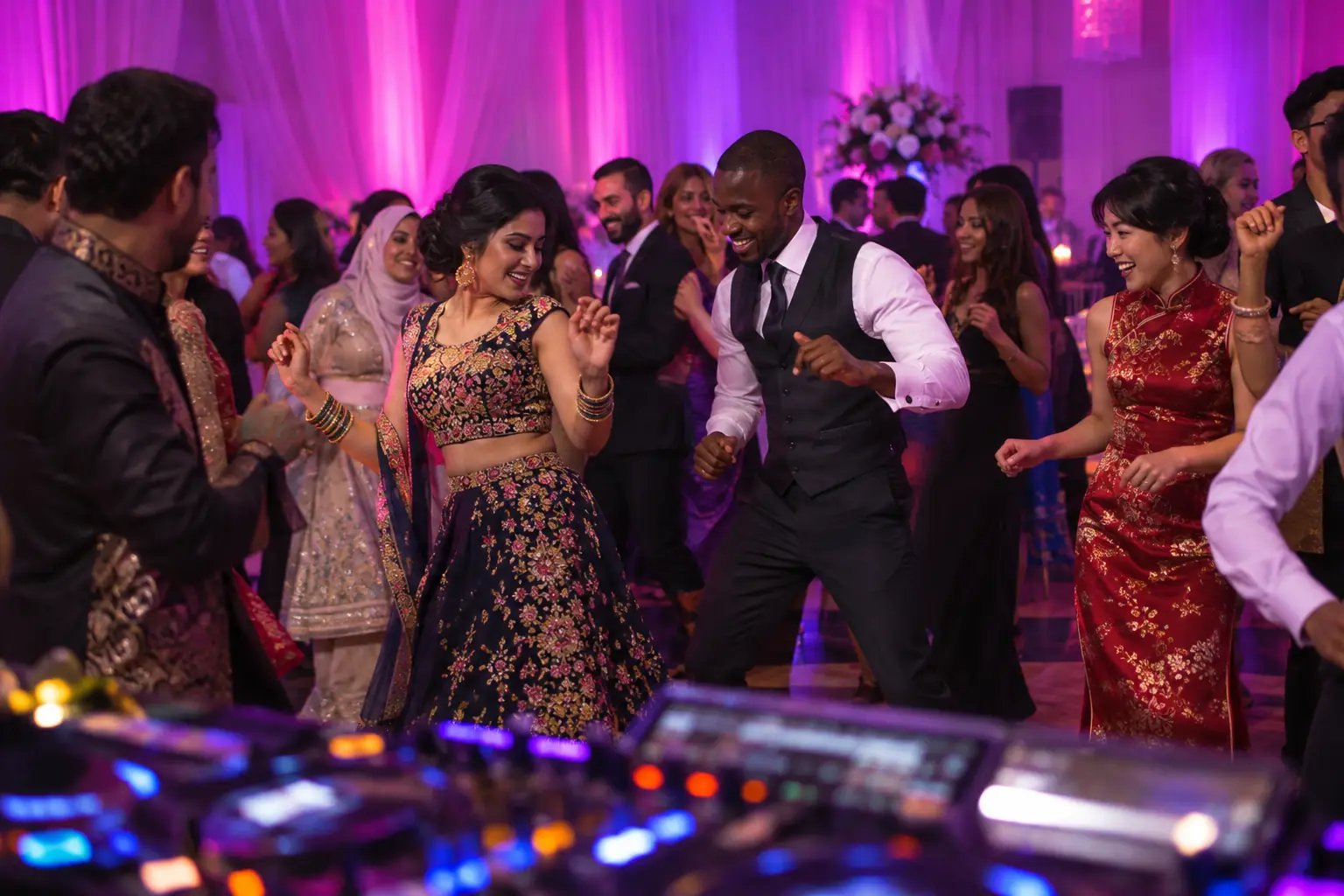
A multicultural wedding is not two weddings stapled together. It is one event where two families need to feel equally represented. The couples who get this right tend to do the same five things before they ever choose a song.
1. Name the non-negotiables from each side
Sit down with both families and list the traditions that must happen. Not preferences, obligations. A sofreh, a zaffa, a tea ceremony, a specific blessing, a grandmother’s song. Write them on one page.
That page becomes the spine of your timeline. Anything not on it is optional, and optional items are what you cut when the schedule tightens.
2. Decide how much space each culture gets
Equal time is not the same as equal space. Some traditions are five minutes and some are forty. What matters is that each family can point to a moment in the night and say that was ours.
I usually recommend one signature moment per culture, spaced across the evening, plus a music block for each. Spacing prevents the night from feeling like two separate parties.
3. Build a music map, not a playlist
A music map assigns styles to parts of the night: ceremony, cocktail, dinner, family dances, open floor, late night. Each culture gets at least one block, and crossover tracks bridge them.
This is also where you decide what not to play. Explicit tracks, songs tied to an ex, or music that conflicts with a family’s beliefs belong on a written do-not-play list.
4. Brief the vendors once, together
Your DJ, planner, photographer and venue coordinator should hear the same plan at the same time. A joint call two to three weeks out prevents the most common failure: three vendors with three different versions of the timeline.
Pronunciation matters too. Give your DJ the correct names and titles in writing, including how to say them, so introductions land warmly instead of awkwardly.
5. Protect one moment that belongs to no tradition
The best multicultural weddings have one moment that is simply about the couple: a song that means nothing to either culture and everything to them. It gives the whole guest list a shared reference point.
Place it after the family dances, when everyone is already standing. It resets the room and lets the open floor begin from a place of joy rather than obligation.
Key takeaways
- Write one page of non-negotiable traditions from both families.
- Give each culture a signature moment and a music block.
- Map music to parts of the night instead of listing songs.
- Brief every vendor together and provide names phonetically.